PRODUCT
BESS Battery Energy Storage System Container Assembly Solution China
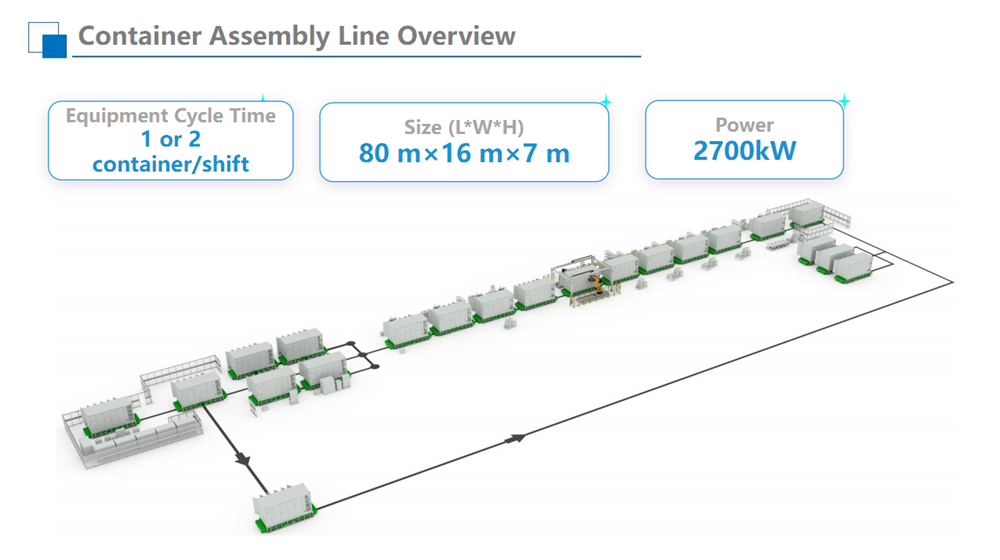
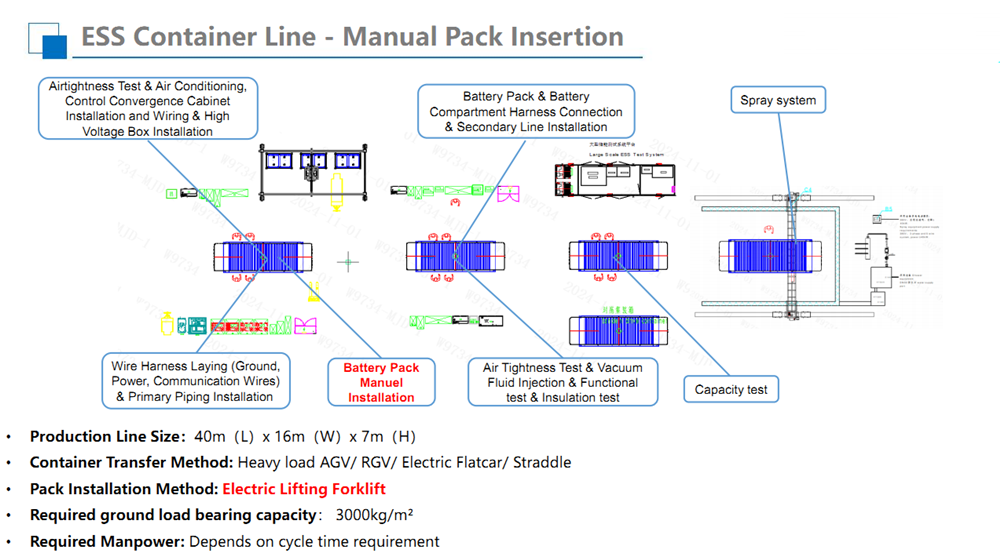
This automatic loading solution of battery packs into clusters is a complete set of automated process solution applied in energy storage system integration factories. Cooperated with intelligent equipment, vision positioning, force sensing, material handling system and MES interconnection, it replaces the traditional operation mode using forklifts and manual adjustment.
Automatic Loading Solution of Battery Packs into Battery Clusters for Energy Storage Containers
1. Definition
This automatic loading solution of battery packs into clusters is a complete set of automated process solution applied in energy storage system integration factories. Cooperated with intelligent equipment, vision positioning, force sensing, material handling system and MES interconnection, it replaces the traditional operation mode using forklifts and manual adjustment. The solution realizes fully automatic and high-precision loading of heavy-duty battery packs into designated positions of cluster racks inside energy storage containers with non-damage assembly, covering the whole workflow including container feeding, battery pack transportation, position alignment, pack insertion, locking and data uploading.
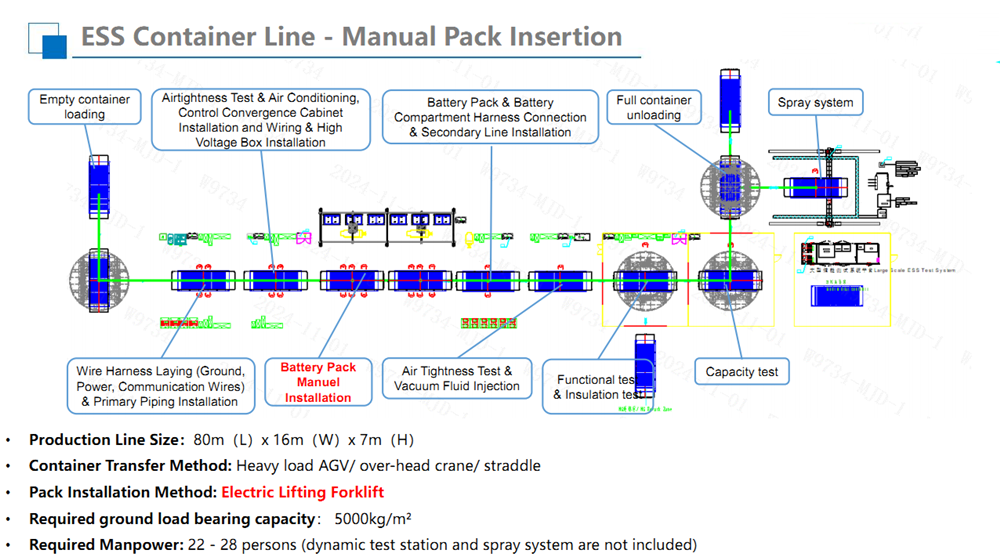
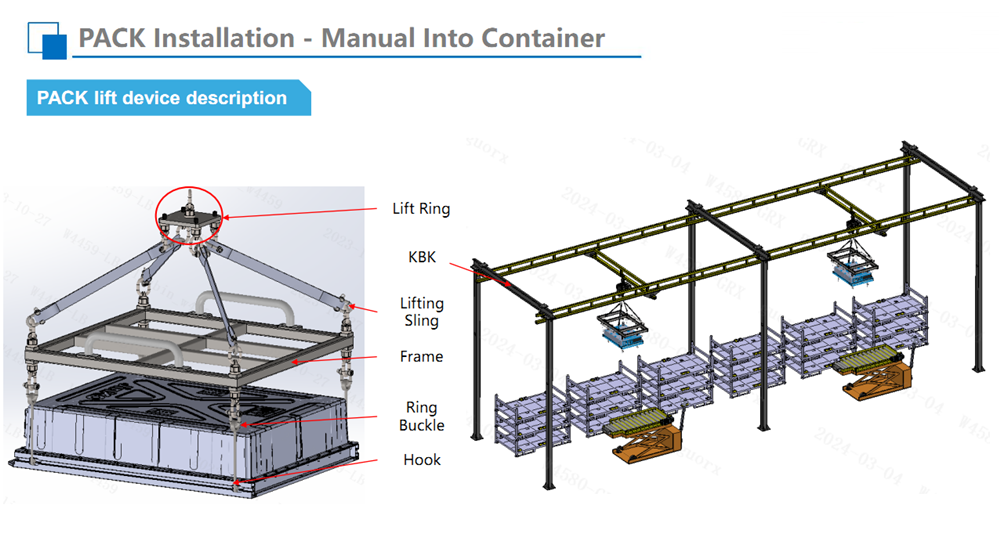
Traditional manual operation has obvious drawbacks: heavy battery packs lead to large alignment deviation, easy shell collision, extrusion of high-voltage connectors, potential personal injury risks, low production tact time, which cannot meet the production demand of GWh-level manufacturing bases.
2. Three Main Technical Routes
Route 1: Heavy-duty Industrial Robot + 7th Axis System (Preferred for Flexible Production Lines)
System composition: 6-axis heavy-duty robot (load capacity: 800–1500 kg), ground traveling 7th axis, customized flexible gripper, 2D+3D vision system and force sensor.
Process flow: Barcode scanning of incoming battery packs on conveyor → Robot grabs battery packs → 3D camera detects cluster racks inside containers and automatically compensates deviation caused by container deformation and uneven floor → Posture adjustment → Smooth slow insertion into cluster position → Real-time resistance monitoring via force control; emergency stop once abnormal resistance is detected to prevent extrusion damage.
Advantages: Flexible for mixed production of multiple container types (20ft / 40ft) and various battery pack specifications.
Cycle time: 60–90 seconds per battery pack.
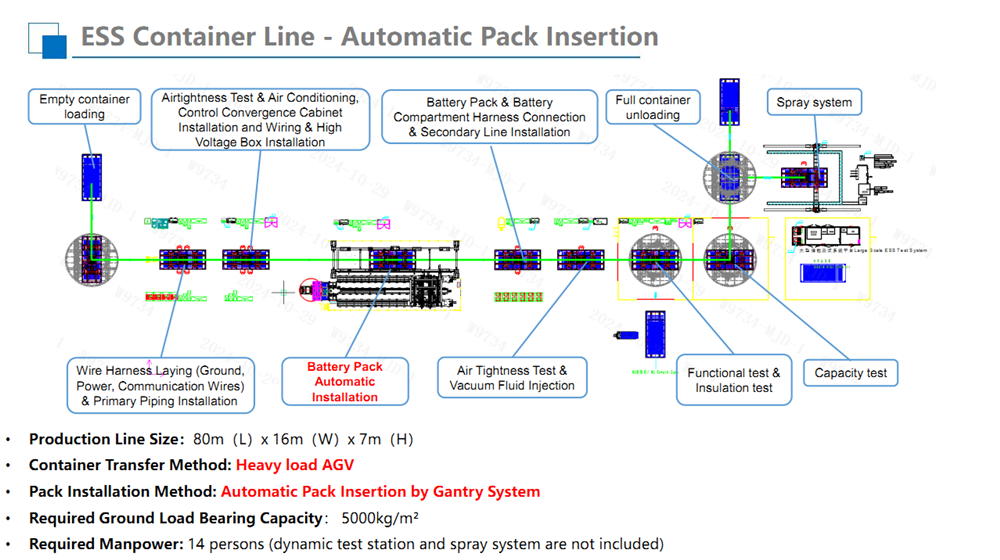
Route 2: Gantry Servo Pushing Mechanism with Ground Rail (Mass Production for Single Standard Model)
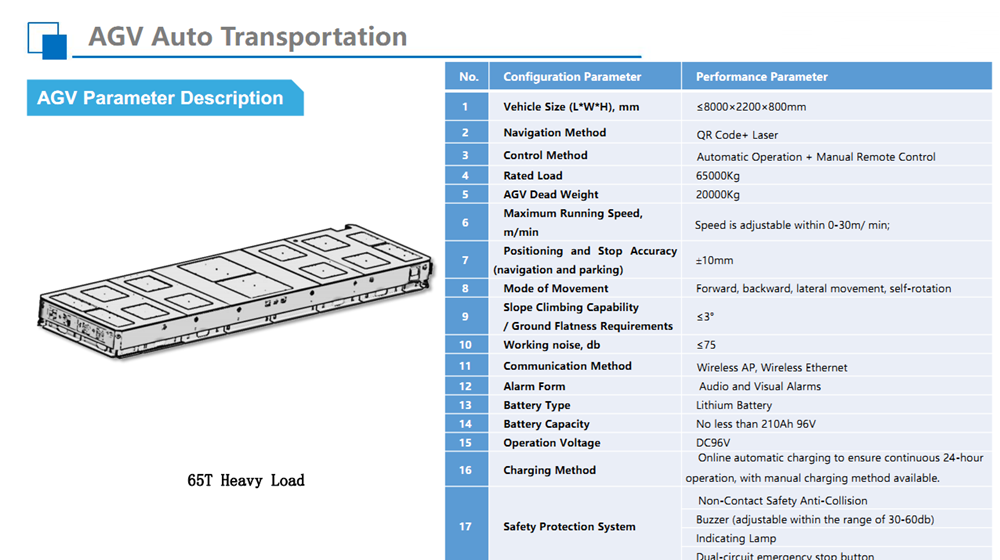
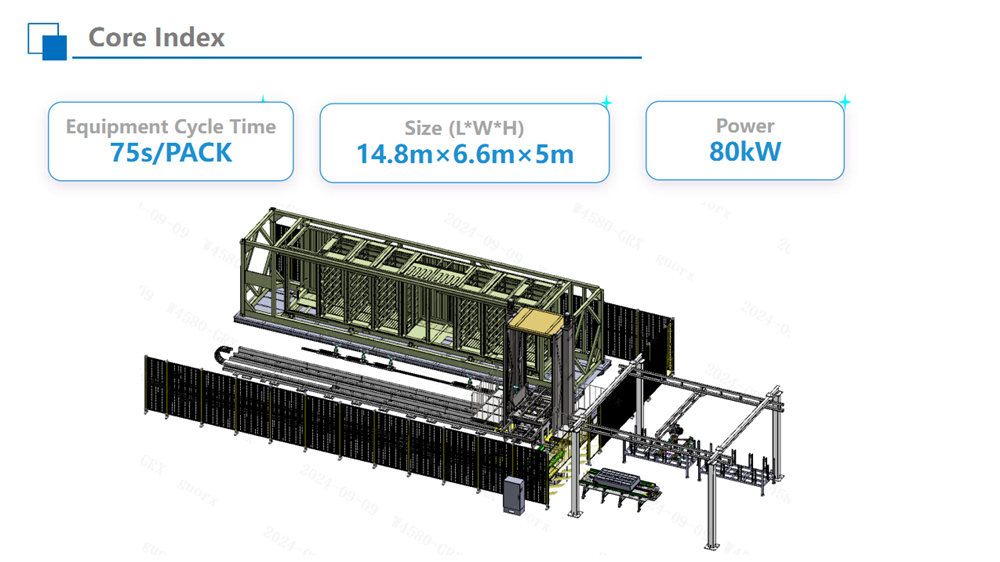
System composition: Heavy-duty RGV for container transfer, fixed gantry servo pushing platform, roller conveyor and positioning stoppers.
Features: Fixed equipment layout; containers are transported to loading station by RGV. Battery packs are fed from side direction and pushed into clusters by servo actuator.
Advantages: Stable mechanical structure, lower investment cost and shorter tact time (minimum 60s per pack).
Limitations: Poor flexibility; massive mechanical adjustment required when switching container models. Suitable for standardized large-volume production.
Route 3: Mecanum Wheel Omni-directional Heavy AGV Loading Vehicle (Workstation Independent Layout & Old Production Line Retrofit)
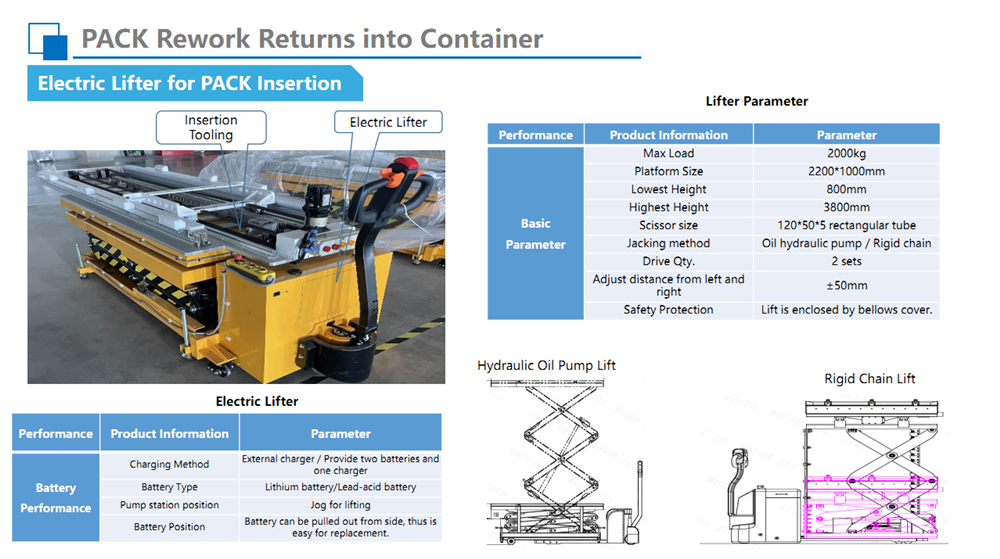
System composition: Mecanum wheel heavy-load AGV, lifting & pitching pushing platform, on-board vision system.
Features: No fixed rails required with flexible movement. Containers stay stationary while AGV shuttles between battery pack buffer zone and containers.
Application: Workshops with limited space, renovation of existing workshops, small-batch & multi-batch production.
Limitations: Continuous high-beat stability is slightly inferior to ground rail and robot solutions.
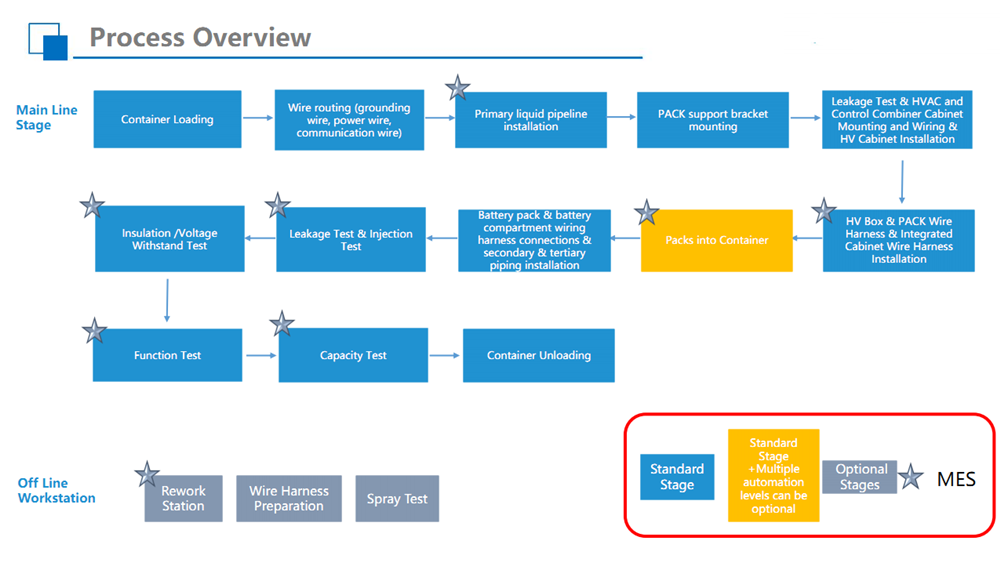
3. Standard Complete Process Flow
1. Container Feeding & Positioning
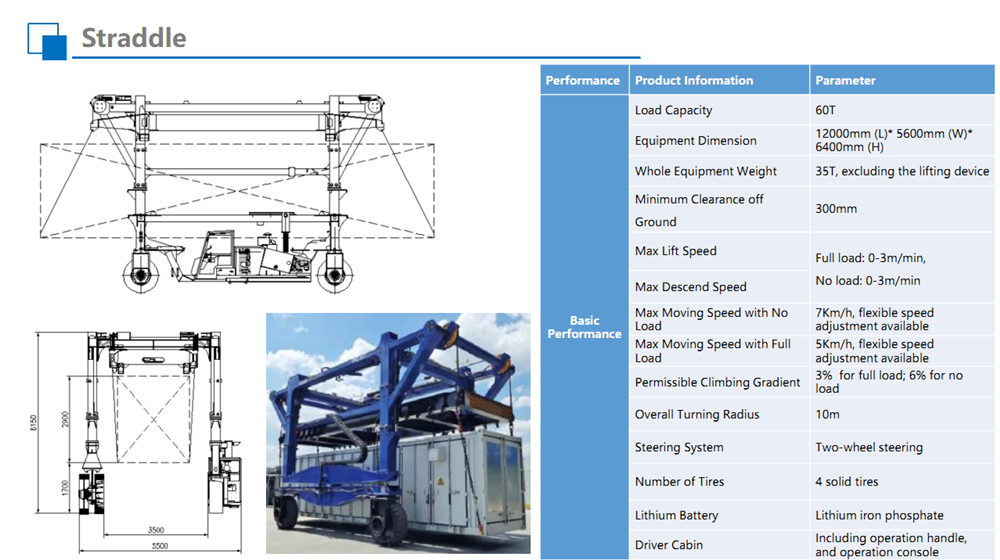
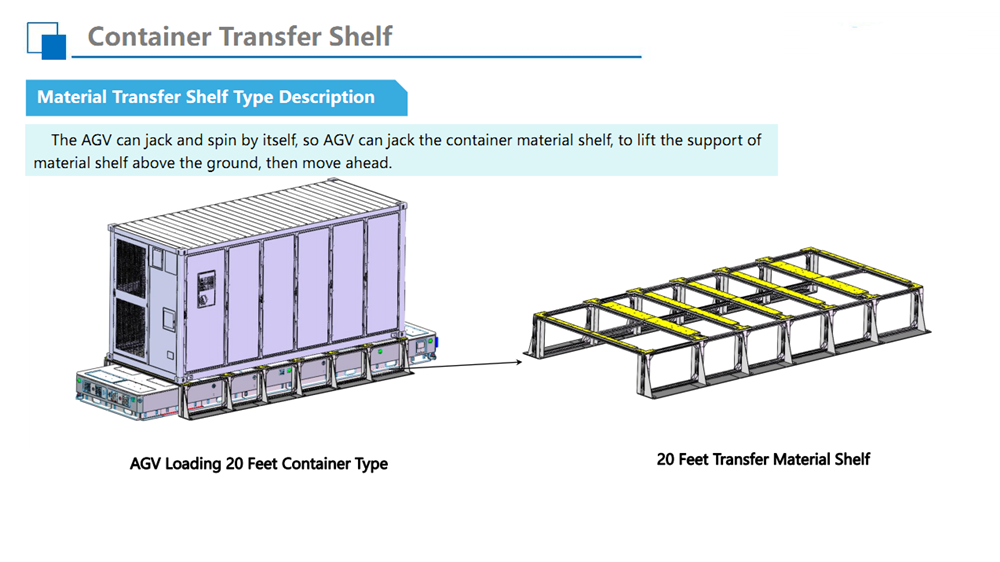
Heavy-duty RGV/AGV transports empty pre-assembled energy storage containers (with cluster racks, liquid cooling pipelines and fire protection system installed) to the loading workstation. Automatic clamping and positioning, container doors are fixed after opening.
2. Battery Pack Conveying & Buffering
Finished battery packs are transported to buffer zone. MES reads SN code of battery packs and matches corresponding cluster position number inside container.
3. Global Vision Positioning
2D+3D vision identifies battery pack outline and coordinate of cluster guide rails, adaptively compensates manufacturing deformation and installation offset of containers (adaptive compensation range: ±30~50 mm).
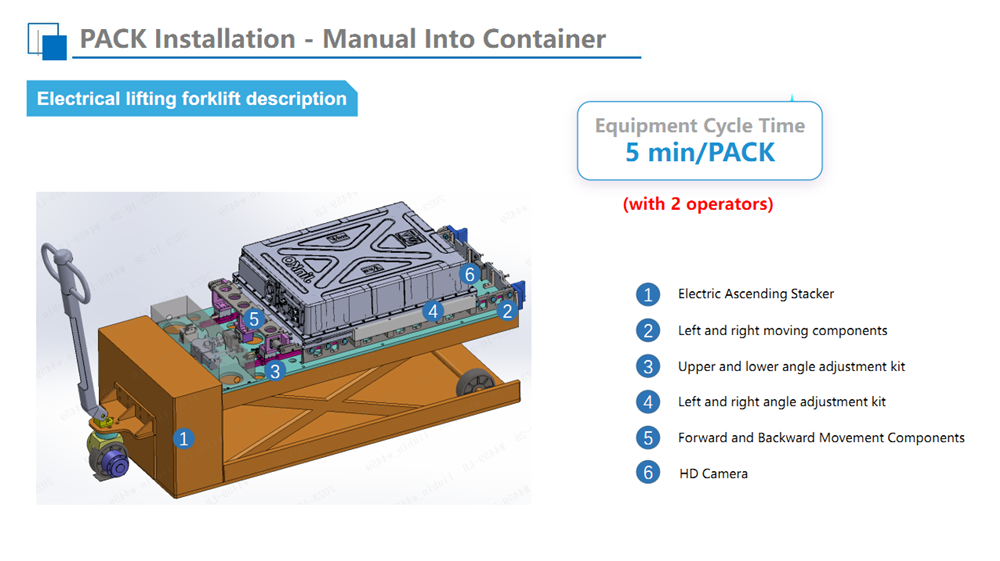
4. Pack Grabbing & Posture Adjustment
Adjust horizontal level and pitching angle to keep battery pack parallel with cluster guide rails, avoiding scratch of insulation layer and damage of high-voltage connectors.
5. Servo Controlled Insertion (Core Process)
Uniform-speed insertion with closed-loop force monitoring. Equipment stops immediately once pushing force exceeds threshold to avoid hard pushing damage of connectors and pack housing. Target repeated positioning accuracy: ±1 mm.
6. Position Confirmation, Gripper Release & Retraction
Dual confirmation via vision and travel sensor after full seating of battery pack. Gripper releases and equipment retreats for next cycle.
7. Post-loading Process
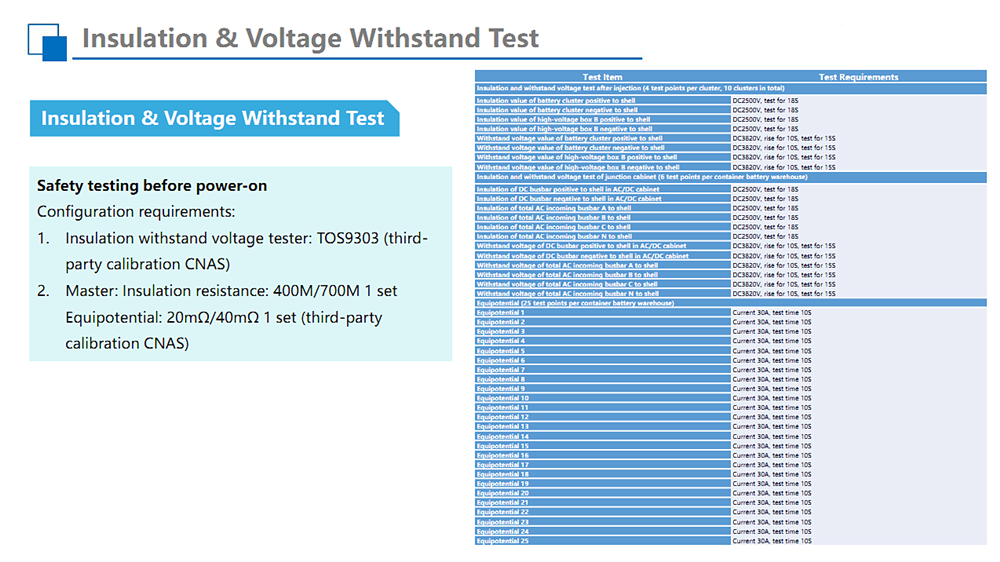
After all packs are loaded into clusters, containers flow to subsequent stations: automatic bolt locking of packs, high-voltage cable connection, insulation test and final EOL test.
8. Full Data Traceability via MES
All data including battery pack barcode, cluster position ID, equipment operating parameters and force curve during insertion are archived to realize full-lifecycle traceability of energy storage containers.
4. Core Technical Highlights for Project Evaluation
1. Multi-modal vision system: Combination of 2D rough positioning and 3D precise positioning to eliminate deviation from container deformation.
2. Force-controlled servo insertion: Rigid pushing is forbidden to protect high-voltage electrical connectors.
3. Multi-layer safety protection: Laser area scanner, contact anti-collision, overload emergency stop, anti-collision protection for battery packs.
4. Flexible gripper: Compatible with battery packs of different width and height, supporting rapid model changeover.
5. Digital interconnection: Connect with MES for work order distribution, fault alarm and production data collection.
6. Environment adaptability: Adapt to workshop dust and temperature variation; spark prevention design conforms to energy storage industry safety requirements.
5. Benefits Compared with Manual Operation
✅ Safety: Eliminate personal injury risks caused by handling heavy loads; prevent battery damage from collision.
✅ Product Quality: Millimeter-level assembly precision, reduce scratch of guide rails and connector damage, lower on-site commissioning failure rate.
✅ Production Efficiency: Support 24-hour continuous operation, reduce on-site labor by 60%~80%.
✅ Assembly Consistency: All operation parameters are monitorable and traceable, eliminating inconsistency caused by manual operation.
✅ Long-term Economic Benefit: Equipment investment can be amortized under mass production; solve recruitment difficulties of heavy manual labor.
6. Applicable Scenarios
Energy storage system integration factories for 20ft / 40ft liquid-cooled energy storage containers
New construction or automation upgrading of GWh-level battery pack production lines
Overseas energy storage equipment manufacturing projects (widely adopted in European and Southeast Asian energy storage factories)