PRODUCT
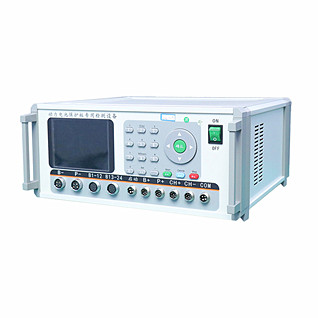
PBTS (M) 1-24 string series battery pack protection board tester China
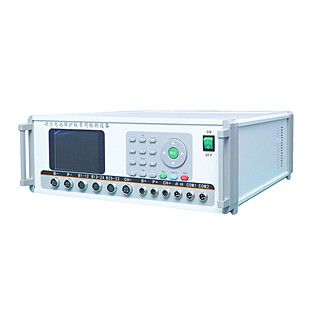
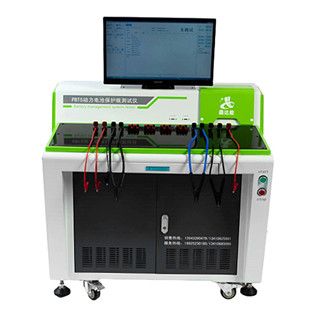
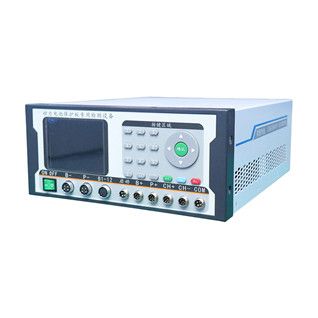
PBTS (M) 1-24 string protection board tester
Applied to the safety testing of lithium battery protection boards, it checks whether the various functional indicators of the protection board are within a reasonable parameter range, provides a set of testing standards for staff, helps improve production efficiency, facilitates quality control, and is compatible with common types of protection boards on the market, such as positive electrode same port (split port), negative electrode same port (split port), positive electrode charging and negative electrode discharging. This product is mainly used in production testing, incoming material testing, quality control, research and development testing, and other aspects.
Product details
Ⅰ.Scope of application
Applied to the safety testing of lithium battery protection boards, it checks whether the various functional indicators of the protection board are within a reasonable parameter range, provides a set of testing standards for staff, helps improve production efficiency, facilitates quality control, and is compatible with common types of protection boards on the market, such as positive electrode same port (split port), negative electrode same port (split port), positive electrode charging and negative electrode discharging. This product is mainly used in production testing, incoming material testing, quality control, research and development testing, and other aspects.
Ⅱ.Equipment environmental requirements and technical parameters
2.1Power supply: AC voltage 220V ± 10%, frequency: 50Hz ± 10%;
2.2 Environmental temperature: -10~45 ℃;
2.3 There is no strong vibration in the environment, and there are no corrosive gases or flammable and explosive gases present.
Ⅲ.Pattern introduction
3.1 Quick testing: Based on the design parameters of the protection board, the device outputs the upper/lower limits of the design parameters for quick testing, which facilitates large-scale and rapid testing and shipment by protection board manufacturers and power battery manufacturers. It is suitable for testing protection boards for various hardware and some software solutions.
3.2 Universal testing: PBST (M) has a unique testing mode where the device detects the delay of the protection board and quickly tests the data of the protection board according to the testing speed set by the manufacturer. The testing speed is moderate and the test displays numerical values, making it suitable for testing rough data of the protection board quickly.
3.3 Accurate testing: It can accurately detect the precise values of various functional parameters of the power battery protection board (with an error of ± 1mv), facilitating sample debugging and development, and providing a set of standards for rapid testing for R&D personnel.
3.4 Laboratory mode: Independently set the voltage of a single string, simulate the voltage variation of a single battery within 0.5-5V, meet the conditions of battery balance, overvoltage, and undervoltage settings, simulate charging and discharging functions, select charging or discharging modes separately, determine the MOS transistor's turn off or on, and support viewing the working current of each string during operation.
Ⅳ.Features
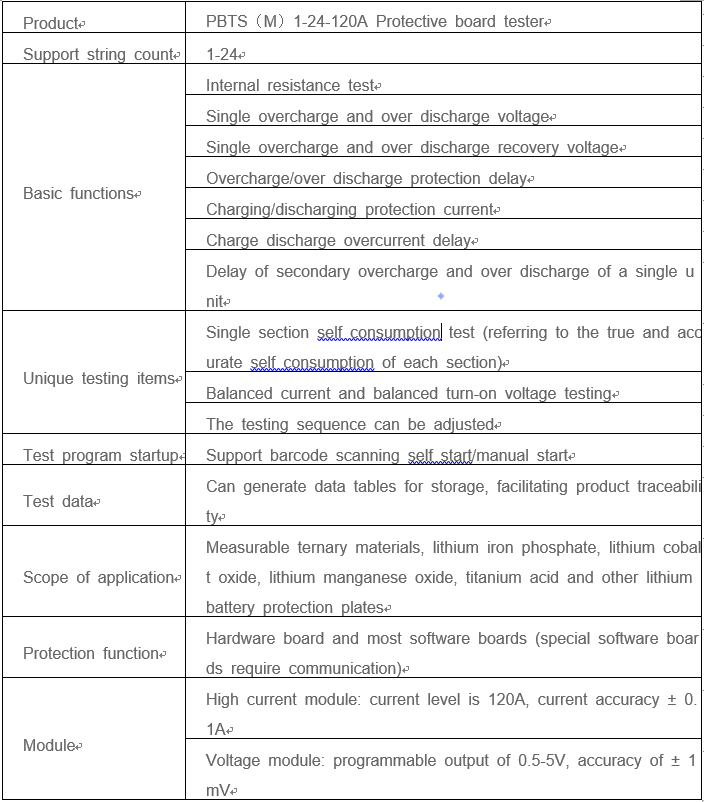
4.1Equipment testing items
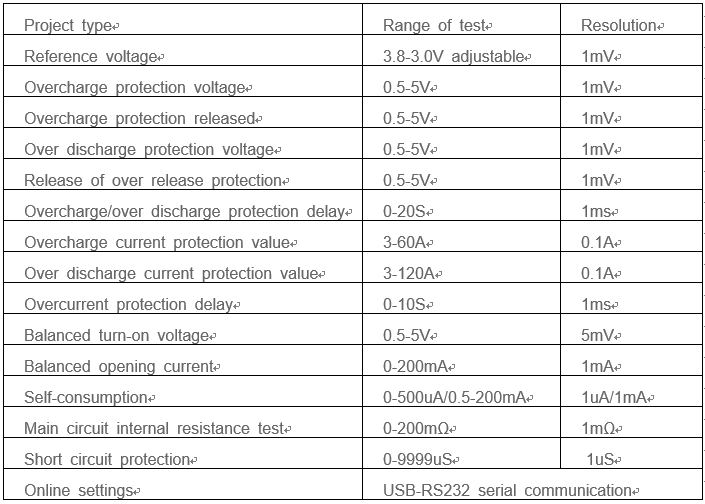
4.2 Equipment Technical Parameters
4.3 Software section
4.3.1 Computer software:
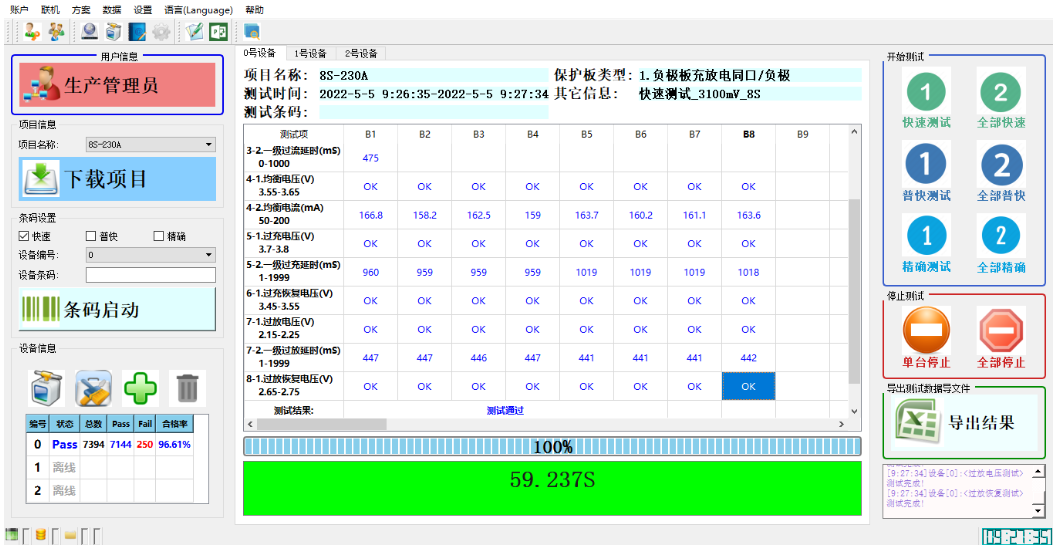
Running on a computer, coordinating and controlling the entire testing system, completing data collection and organization, and generating test reports. The testing software system has independent intellectual property rights, complete software system functions, and determines whether the test results pass/fail based on user-defined specifications; The testing system saves all test result information locally in the form of Excel files.
4.3.2 Program control mode:
The device provides C++/C # dynamic libraries, which support secondary development. Customers can call the dynamic libraries to operate the testing projects of the device to implement the testing process of the customized testing protection board. They can also operate the device laboratory mode to achieve the calibration, comparison, and burning functions of the software protection board.
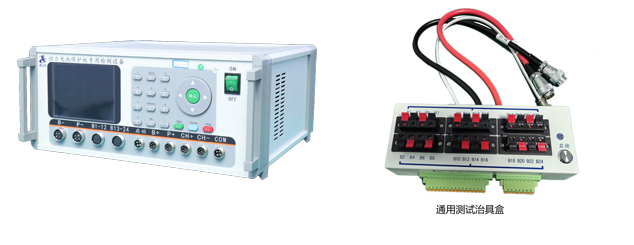
Ⅴ.Product appearance and structure
Ⅵ. Computer interface
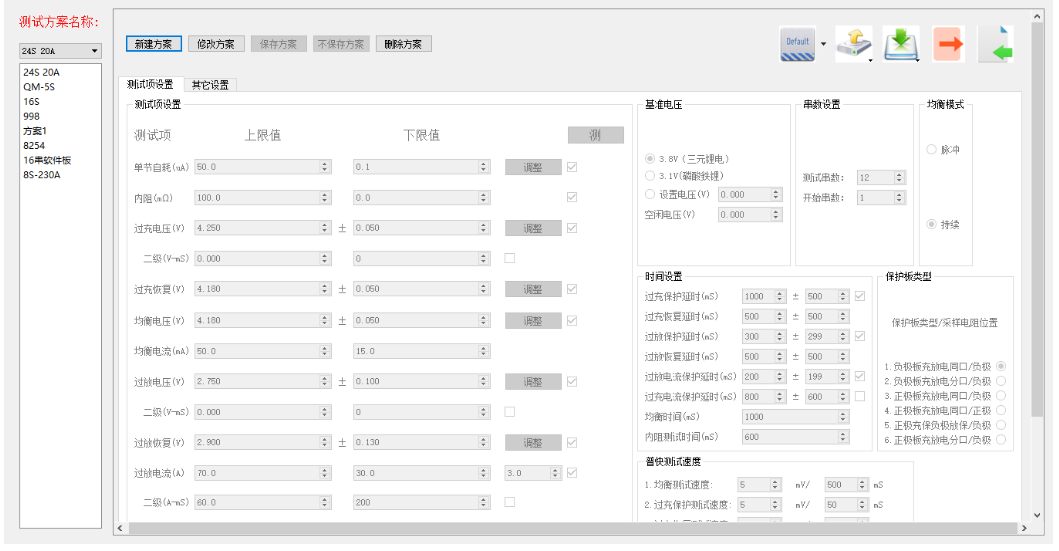
5.1 Software testing interface
5.2 Laboratory mode interface
Ⅶ.List of documents shipped with the equipment
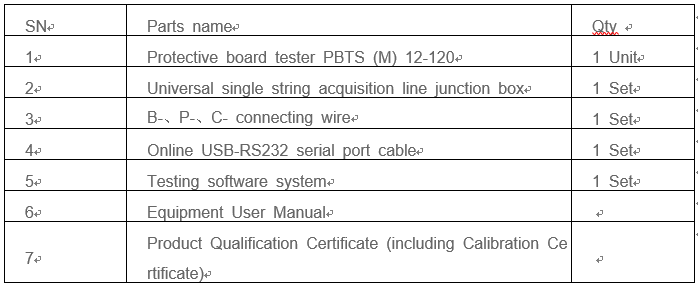
Attention: Customers using the testing software need to bring their own computer, and technical personnel will guide the software installation and provide teaching and training